
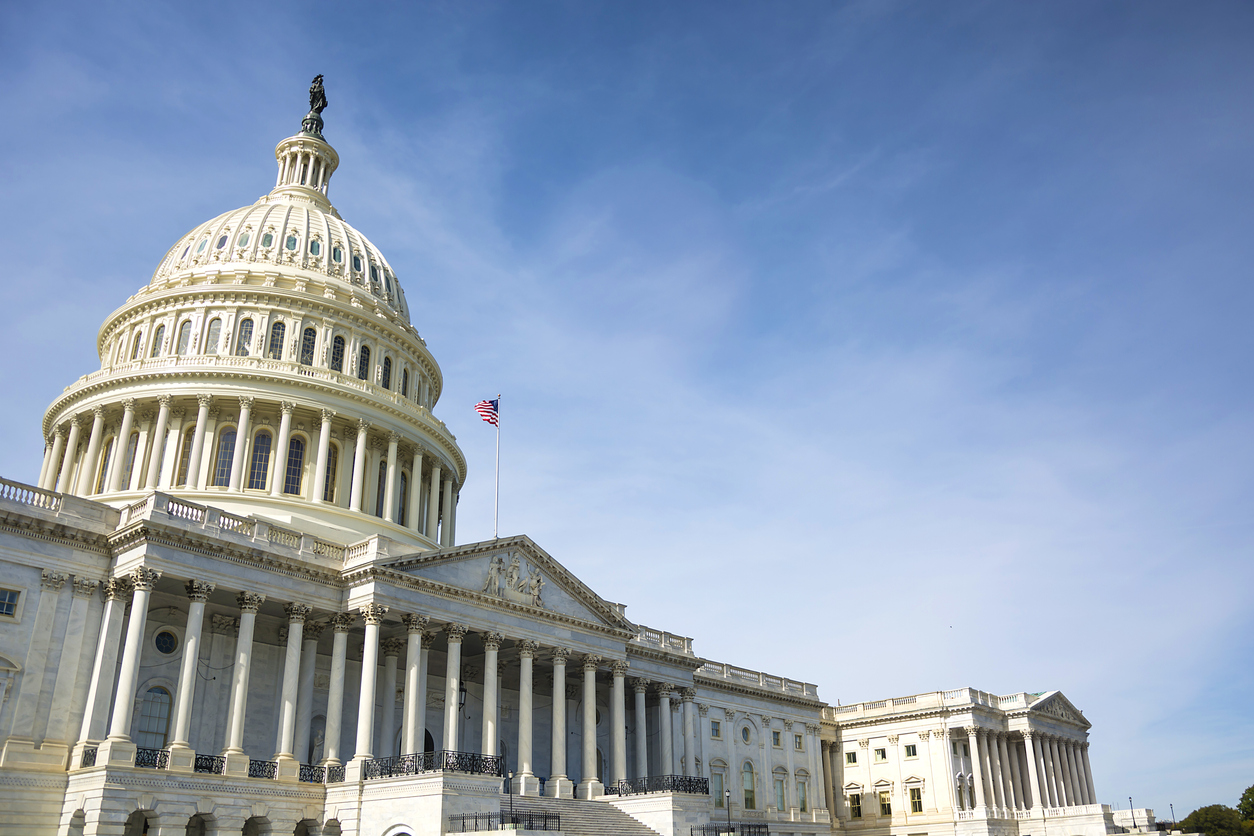
The President recently signed into law legislation funding the Departments of Labor, Health and Human Services, Education and Related Agencies and the Department of Defense. The final bill includes extensive guidance to agencies regarding critical health programs. Enactment of bill into law followed extensive legislative advocacy efforts across multiple committees and both chambers of Congress throughout the FY 2026 appropriations cycle by professionals in the Powers legislative practice.
The legislation also included health policies which extended a number of programs and waivers, mostly related to Medicare and Medicaid. Included in the legislation attached to the funding bill is landmark pharmacy benefit manager (“PBM”) protections for pharmacies. The legislation provides pharmacy protections against unfair contracting practices by some PBMs by implementing stronger protections under the Any Willing Provider law. The law will require PBMs to offer fair and reasonable contract terms to pharmacies under Medicare Part D, protecting pharmacies from being priced underwater and making it challenging for them to stay in network. The law will also prohibit PBM compensation in Medicare Part D from being tied to the manufacturer’s list price of a drug.
In the appropriations bills and committee reports, the Powers legislative team successfully secured funding and report language that:
- Secures direct funding and report language for the Healthy Start Self-Measured Blood Pressure Monitoring Initiative to implement a successful pilot program that identifies preeclampsia in high-risk women and communities.
- Provides $500,000 in Congressionally Directed Spending (“CDS”) “earmark” funding to enable a large, Federally Qualified Health Center (“FQHC”) in the Northeast to implement an innovative urban education program. The initiative will create employment opportunities while improving community health through agricultural and vocational education, providing students from 17 surrounding municipalities with Supervised Agricultural Experience (“SAE”) in hydroponic gardening and local food systems as part of their Vocational Agriculture education and career preparation.
- Encourages Pediatric Mental Health Care Access (“PMHCA”) Program State grantees to foster collaboration with comprehensive home-based behavioral healthcare services for young people and adolescents. Additionally, the bill includes report language directing CMS to strengthen and expand access to Home and Community-Based Services (“HCBS”), including urging the Centers for Medicare & Medicaid Services (“CMS”) to issue guidance outlining how states can implement intensive home and community-based behavioral health services to address the growing behavioral and mental health crisis.
- Includes both bill text and report language that support national postgraduate Nurse Practitioner Residency Training Programs funded by the Health Resources and Service Administration (“HRSA”), and allocates $7 million for grants to establish, expand, and maintain community-based nurse practitioner residency and fellowship programs that are accredited or pursuing accreditation for postgraduate nurse practitioners who specialize in primary care or behavioral health, with a preference given to programs who operate within FQHCs.
- Includes complementary language supporting postgraduate Nurse Practitioner (“NP”) Residency Training within the broader Advanced Nursing Education (“ANE”) Program, which is funded at $89.6 million for FY 2026. The Committee specifically highlighted “the importance of strengthening the primary care workforce and training providers to work in community-based settings, particularly by funding Advanced Nursing Education and Residency Programs.”
- Secures Senate Department of Defense (“DOD”) Appropriations Committee approval of report language accompanying the FY 2026 DOD Bill ensuring that orthotics and prosthetics outcomes research remains eligible for funding through the Peer-Reviewed Medical Research Program, funded at $370 million within the DOD’s Congressionally Directed Medical Research Program (“CDMRP”), an increase from the FY 2025 funding level of $150 million.
- Preserves the Oral Health Training Programs at level funding, despite cuts to other Title VII programs at HRSA, and allocates funds for Pediatric Dentistry to support the residencies in pediatric oral health and the Dental Faculty Loan Repayment Program.
- Maintains current level funding for the National Spina Bifida Program representing an increase over the President’s budget recommendation. The bill also maintains a distinct line item at the National Center for Birth Defects and Developmental Disabilities at CDC. The National Spina Bifida Program remains the only federal program exclusively dedicated to Spina Bifida research and support services.
- Maintains at existing funding levels several programs of importance to Powers clients and on which Powers’ client, the Disability and Rehabilitation Research Coalition (“DRRC”), advocated, including:
-
-
- A slight increase in funding for the National Institutes of Health (“NIH”) rather than a $20 billion cut in funding included in the President’s budget;
- Level funding of $119 million for the National Institute on Disability, Independent Living, and Rehabilitation Research (“NIDILRR”) rather than a decrease to $100 million under the House bill; and,
- Level funding for the Limb Loss Resource Center and the Spinal Cord Injury Resource Center, as well as the Traumatic Brain Injury state grant program under the Administration for Community Living (“ACL”).
-
Powers legislative team maintains a robust appropriations and federal grant practice that is available for consultation. For more information, contact info@powerslaw.com and you will be referred to an appropriate professional.